Places / Attractions
Salim Singh Ki Haveli: Worth Visiting?
Salim Singh Ki Haveli, built 1815, rises five stone levels to a 38-balcony peacock crown. Entry is Rs 50-100; allow 30-45 minutes inside.
Jai Suda
Fort-Side Trip Planner
3 min read
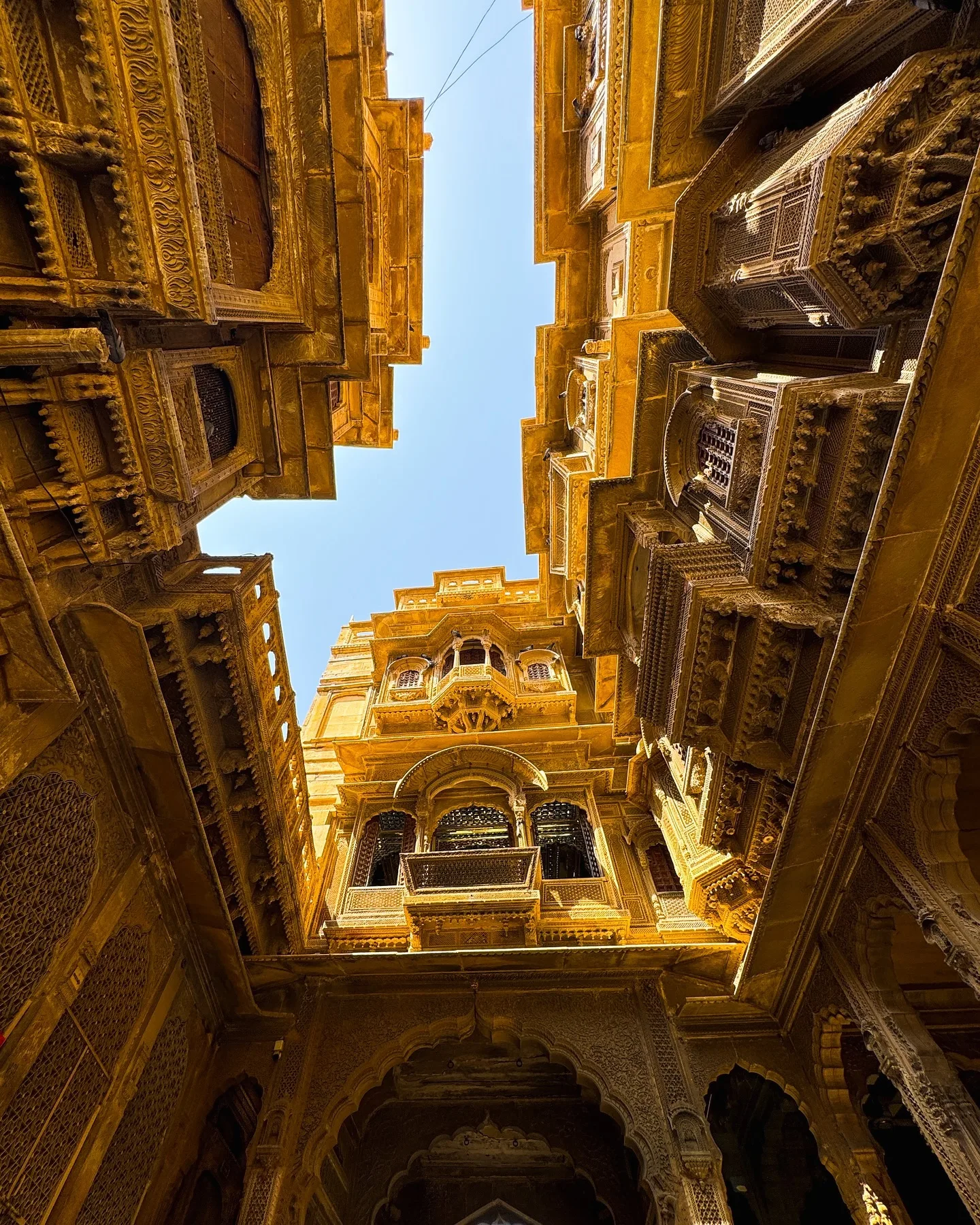
Salim Singh Ki Haveli is the prime minister's 1815 mansion by the fort's first gate, flaring upward like a ship's stern to a 38-balcony peacock crown. Entry runs Rs 50-100 (checked Sep 2026).
Five stone levels survive of a planned seven after the Maharawal's order. This guide covers the carving, the feud, and the walking loop.
Who built Salim Singh Ki Haveli, and when?
Salim Singh Mehta, the formidable prime minister of Jaisalmer state, raised this haveli in 1815 under Maharawal Mulraj II's rule. It stands by the fort's first gate in Sadar Bazaar, a short walk from Gopa Chowk.
The builder's edge shows in the ambition: seven planned storeys against a king's palace hill. That clash with the Maharawal is the story every stone here tells.
Why is it called the Ship Palace?
The ground floor runs narrow while the upper floors flare outward like a ship's stern, earning the name Jahaz Mahal. The cantilevered mass hangs without a heavy base, which still surprises first-time visitors.
Stand across the lane to read the full profile before entering. The ship reading only lands from a distance.
Salim Singh Ki Haveli: Architecture and Visit Facts
| Element | Detail | Visitor Note |
|---|---|---|
| Plan and date | 1815, Salim Singh Mehta | Prime minister's residence |
| Ship profile | Narrow base, flaring top | Read it from across the lane |
| Peacock crown | 38 jharokhas, no mortar | Steep stairs; climb slowly |
| Entry and hours | Rs 50-100; 8:00 AM-6:30 PM | 30-45 minutes inside |
| Walking loop | Sadar Bazaar, 4 min from Gopa Chowk | Pair with Patwon and Nathmal |
Figures checked Sep 2026; October to March is the main comfort window and Diwali and New Year weeks bring peak crowds, when cab rates often run 20-30% higher. Confirm on site before paying.
What crowns the top at Moti Mahal?
Thirty-eight carved jharokhas ring the top floor in a peacock's fanned silhouette, cut from interlocking sandstone without cement or mortar. Brackets and jaalis carry the finest early-19th-century desert carving in the city lanes.
Climb slowly: corridors run tight and stairs steep. Children and elders should take the upper pavilions one landing at a time; wheelchair users and travellers with weak knees should skip the upper levels and enjoy the facade and ground-level courtyards instead.
What is the seven-storey story?
Accounts hold that Salim Singh planned seven storeys, taller than the palace on the fort, until the Maharawal ordered the top two pavilions of glass and wood pulled down. Five stone levels stand today.
Descendants still keep private rooms below while the upper chambers run as a heritage museum. Treat lived doors as out of bounds without asking.
How do tickets, timings, and the walking loop work?
The haveli opens 8:00 AM to 6:30 PM daily, with entry at Rs 50 for Indian visitors and Rs 100 for foreign travellers (checked Sep 2026). Thirty to 45 minutes covers the museum chambers and upper balconies.
Loop it on foot with Patwon Ki Haveli's five mansions and Nathmal Ki Haveli nearby. Photography is allowed across the public courtyards and upper chambers.
Frequently Asked Questions
Which is better: Patwon Ki Haveli or Salim Singh Ki Haveli? Patwon is larger at five linked mansions; Salim Singh answers with the peacock silhouette and the prime minister's story. Walk both if time allows.
How much time does Salim Singh Ki Haveli need? About 30 to 45 minutes for the museum chambers and upper balconies.
Is photography allowed inside? Yes, across the public courtyards and upper balcony chambers.
Salim Singh Ki Haveli earns its stop through one silhouette and one feud: the peacock crown and the seven-storey clash. Entry at Rs 50-100 keeps it cheap.
Go before 11 AM for soft carving light, confirm ticket bands on site in festive weeks, and mind the steep stairs with elders.
Editorial voice
Jai Suda
Fort-Side Trip Planner
Heritage researcher and longtime Jaisalmer resident. Writes on fort architecture, havelis, and the living history of the old city.
Calm, practical, and route-aware; prioritises pacing over checklist tourism.